Description
CCR8/CCL1: A key chemokine axis in tumor immunosuppression and its therapeutic intervention.
- Gene Information: CCR8 is a protein-coding gene that encodes a G protein-coupled receptor. CCL1 is its highly specific chemokine ligand. Together, they form a crucial chemokine-receptor axis.
- Protein Expression: CCR8 is predominantly and highly expressed on the surface of tumor-infiltrating regulatory T cells (Tregs). Its ligand, CCL1, is primarily secreted by tumor cells and tumor-associated macrophages within the tumor microenvironment.
- Signaling Pathway: CCL1 selectively binds to the CCR8 receptor, triggering intracellular G protein-coupled signaling cascades. This interaction promotes the targeted recruitment, activation, and survival of immunosuppressive Tregs in the tumor microenvironment, thereby suppressing anti-tumor immune responses and facilitating tumor evasion.
- Therapeutic Inhibition: Blocking the CCR8/CCL1 interaction with targeted antibodies specifically depletes intra-tumoral Tregs without disrupting systemic immunity. This relieves immunosuppression, reactivates effector T cells, and improves clinical outcomes, demonstrating significant potential for enhanced anti-tumor efficacy in cancer immunotherapy.
Targeting strategy
CCR8
- Exons 2 of the mouse Ccr8 gene, which encode the entire protein (from ATG to stop codon), are replaced with the corresponding human sequences in B-hCCR8 mice.
- The endogenous mouse promoter, 5′ UTR, and 3′ UTR regions are retained, allowing human CCR8 expression to be driven by the native mouse Ccr8 promoter, while endogenous mouse Ccr8 transcription and translation are abolished.
CCL1
- Exons 1–3 of the mouse Ccl1 gene, which encode the entire protein (from ATG to stop codon), are replaced with the corresponding human sequences.
- The endogenous mouse promoter, 5′ UTR, and 3′ UTR regions are retained, allowing human CCL1 expression to be driven by the native mouse Ccl1 promoter, while endogenous mouse Ccl1 transcription and translation are abolished.
CCL1 Protein Expression
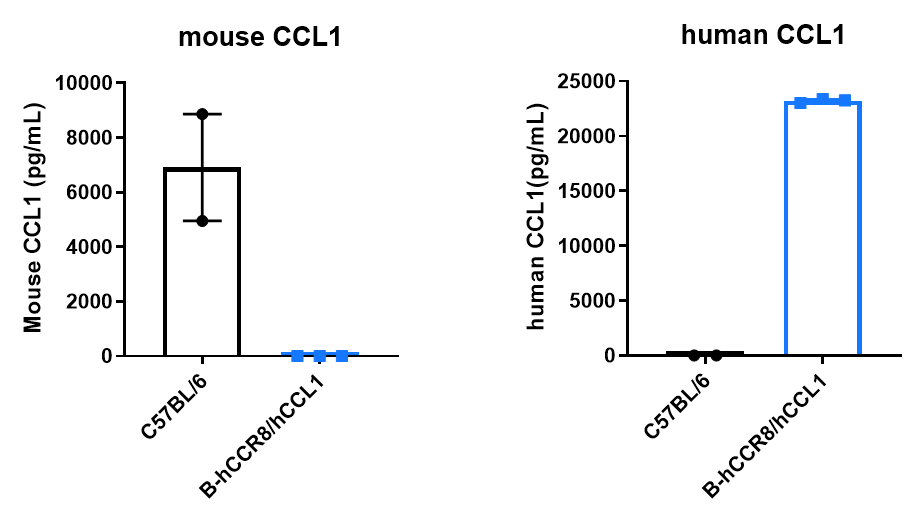
- Mouse CCL1 was detectable in wild-type mice.
- Human CCL1 was exclusively detectable in homozygous B-hCCR8/hCCL1 mice but not in wild-type mice.
Strain specific CCL1 expression analysis in homozygous B-hCCR8/hCCL1 mice by ELISA. Serum were collected from wild-type mice (n=2) and homozygous B-hCCR8/hCCL1 mice (n=3) that stimulated with 7.5ug anti-mCD3ε antibody in vivo, and analyzed by ELISA with species-specific CCL1 ELISA kit.
CCL1 Protein Expression in tumor microenvironment
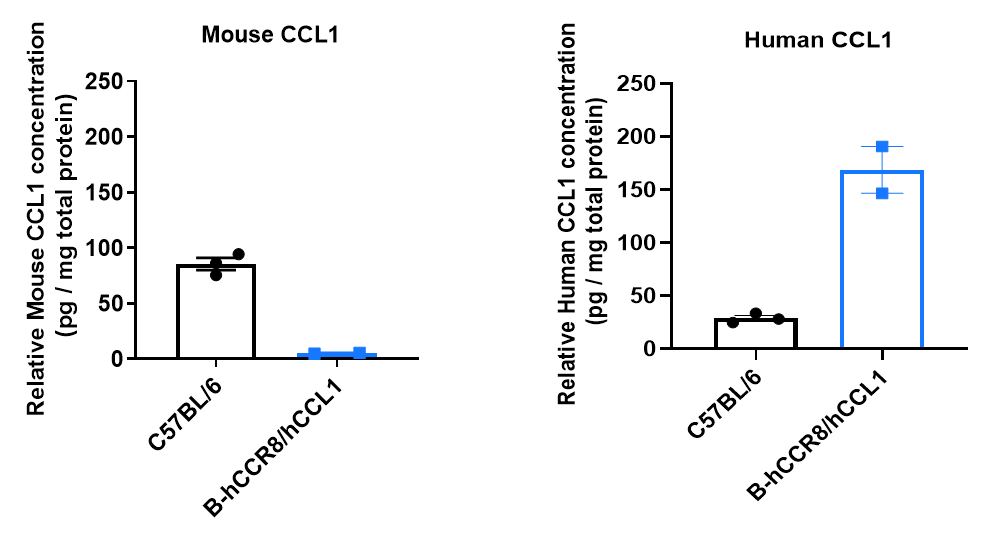
- Mouse CCL1 was detectable in wild-type mice.
- Human CCL1 was exclusively detectable in homozygous B-hCCR8/hCCL1 mice but not in wild-type mice.
Strain specific CCL1 expression analysis in tumor microenvironment of C57BL/6 and B-hCCR8/hCCL1 mice bearing MC38 cells by ELISA. Murine colon cancer MC38 cells were subcutaneously implanted into C57BL/6 (n=3) and B-hCCR8/hCCL1 mice (n=2/3). Tumor tissues were harvested when tumor volume ~ 600mm3 and analyzed by ELISA.
CCR8 Protein Expression in Tumor-infiltrating lymphocytes (TILs)
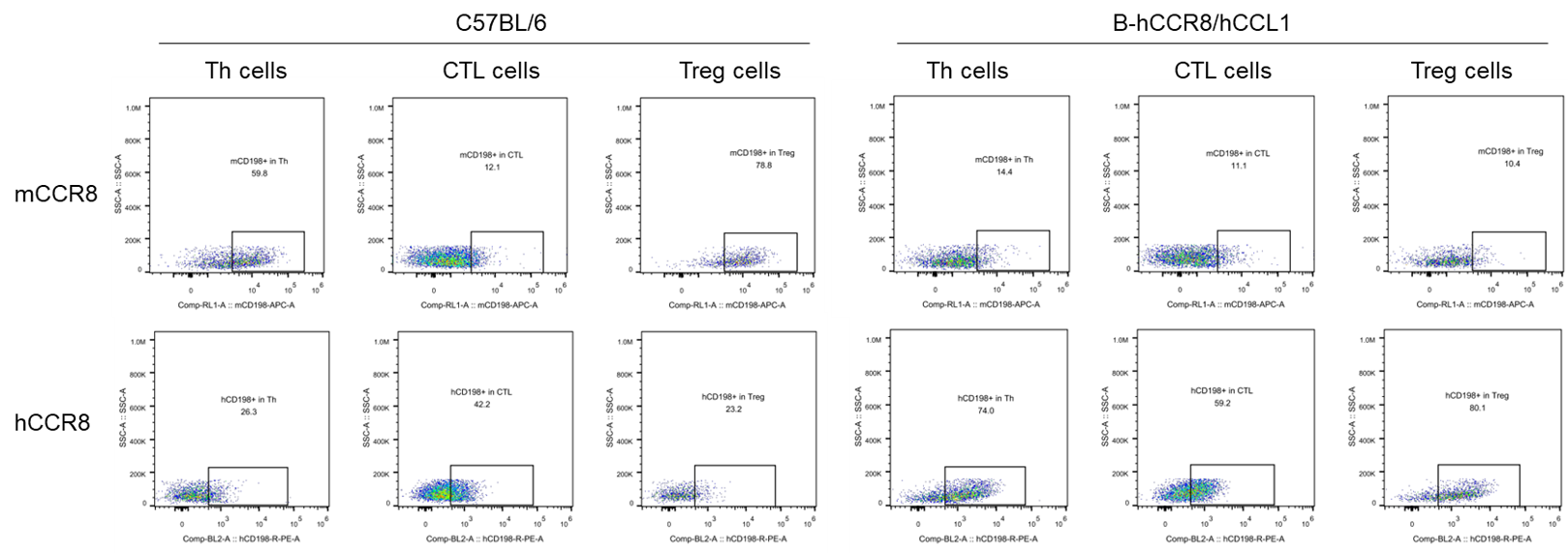
- Mouse Ccr8 was only detected on CD4+ Th cells and Treg cells in wild-type C57BL/6 mice.
- human CCR8 were also detectable in CTL cells of wild type C57BL/6 mice and humanized mice. It could be the antibodies have more unspecific binding with CTLs.
Strain specific CCR8 expression analysis in homozygous B-hCCR8/hCCL1 mice by FACS. MC38 cells were inoculated into wild-type C57BL/6 (+/+) and homozygous B-hCCR8/hCCL1 mice (H/H). Tumors were harvested at the endpoint of experiment, and the TILs were analyzed by flow cytometry.
The tumor-infiltrating lymphocytes in different mice
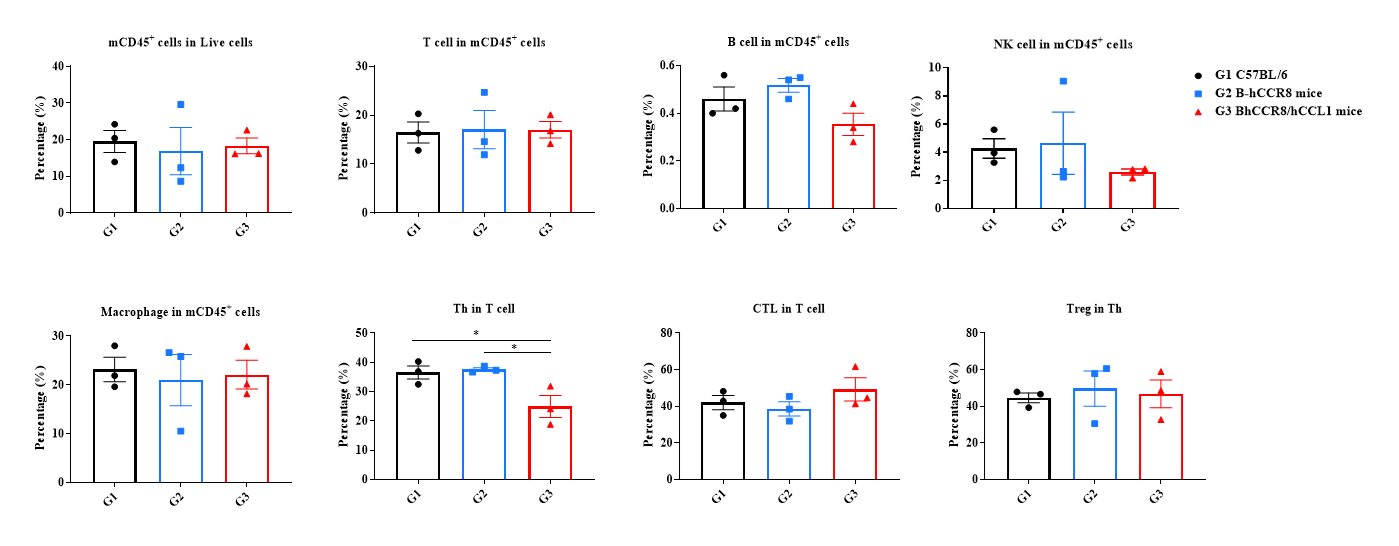
•The percentage of Treg cells (% in Th cells) in B-hCCR8/hCCL1 mice has no significant difference compared with the C57BL/6 mice and B-hCCR8 mice.
Tumor-infiltrating lymphocytes analysis in different mice.
Analysis of Leukocyte Subpopulations
- The percentages of T cells, B cells, NK cells, DCs, granulocytes, monocytes, and macrophages in homozygous B-hCCR8/hCCL1 mice are similar to those in C57BL/6 mice.
- Humanization of CCR8 does not affect normal immune cell development or splenic distribution.
Analysis of leukocyte subpopulations by flow cytometry in immune organs and blood. Splenocytes, peripheral blood, and Lymph nodes were isolated from female C57BL/6 and B-hCCR8/hCCL1 mice (female, 8-week-old, n = 3). Single live cells were gated on the CD45⁺ population and analyzed by flow cytometry as indicated. Values are expressed as mean ± SEM.
Analysis of T Cell Subpopulations
- The proportions of CD4⁺ T cells, CD8⁺ T cells, and Tregs in homozygous B-hCCR8/hCCL1 mice are comparable to those in C57BL/6 mice.
- Humanization of CCR8 does not affect normal T cell development, differentiation, or splenic distribution.
Analysis of T-cell subpopulations by flow cytometry in immune organs and blood. Splenocytes, peripheral blood, and Lymph nodes were isolated from female C57BL/6 and B-hCCR8/hCCL1 mice (female, 8-week-old, n = 3). Single live cells were gated on the CD3⁺ T-cell population and analyzed by flow cytometry as indicated. Values are expressed as mean ± SEM.
Efficacy evalsuation of anti-CCR8 antibody in the Treatment of the Subcutaneous MC38 Model in B-hCCR8/hCCL1 mice
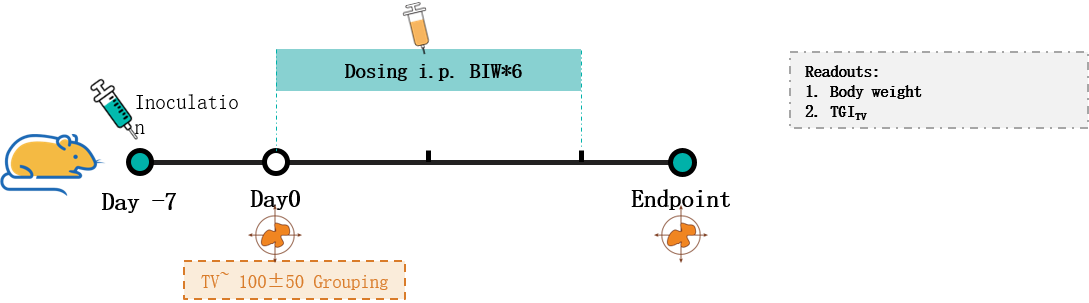
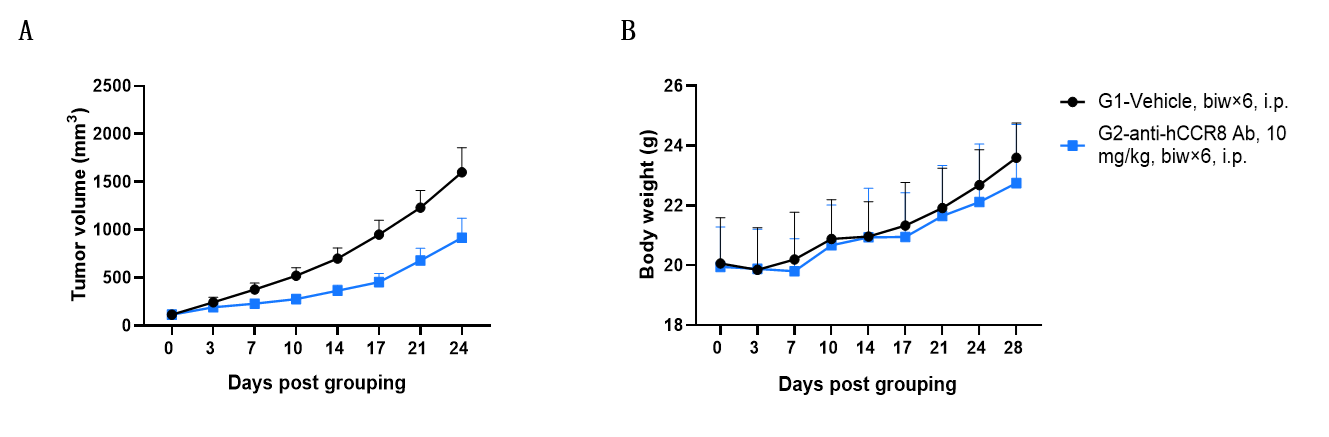
Establishment of a MC38 model in B-hCCR8/hCCL1 mice and in vivo efficacy study of anti-CCR8 antibody. Murine colon cancer MC38 cells were subcutaneously implanted into homozygous B-hCCR8/hCCL1 mice (female, 7–week-old, n=6). Mice were grouped when tumor volume reached approximately 100 ±50 mm³, at which time they were injected intraperitoneally with anti-human CCR8 antibodies (in house).
- Anti-human CCR8 antibodies were efficacious in controlling tumor growth in B-hCCR8/hCCL1 mice.
- B-hCCR8/hCCL1 mice provide a powerful preclinical model for in vivo evalsuation of anti-human CCR8 antibodies.
Efficacy of anti-human CCR8 antibodies in B-hCCR8/hCCL1 mice. (A) Tumor growth curves. (B) Body weight changes during treatment. Values are expressed as mean ± SEM.
- Anti-human CCR8 antibodies were efficacious in controlling tumor growth in B-hCCR8/hCCL1 mice.
- B-hCCR8/hCCL1 mice provide a powerful preclinical model for in vivo evalsuation of anti-human CCR8 antibodies.
MC38 tumor growth curves from individual mice. Murine colon cancer MC38 cells (5×10⁵) were subcutaneously implanted into homozygous B-hCCR8/hCCL1 mice (female, 7-week-old, n=6). Mice were grouped when tumor volume reached approximately 100-150 mm3, at which time they were intraperitoneally injected with anti-human CCR8 antibody indicated in panel.
Analysis of tumor infiltrates lymphocytes by FACS. Tumor cells were harvested at the endpoint of experiment (n=6). Flow cytometry analysis of the lymphocytes were performed to assess cell number and proportion changes. The proportions of CD3+ T cells, CD4+ T cells, Treg cells, and hCCR8+ Treg cells in the anti-CCR8 antibody treatment group showed no significant changes compared to the control group. Values are expressed as mean ± SEM. Significance was determined by one-way ANOVA test. *P < 0.05, **P < 0.01, ***P < 0.001.
* When publishing results obtained using this animal model, please acknowledge the source as follows: The animal model [B-hCCR8/hCCL1 mice] (Cat# 121836) was purchased from Biocytogen.